


.svg)


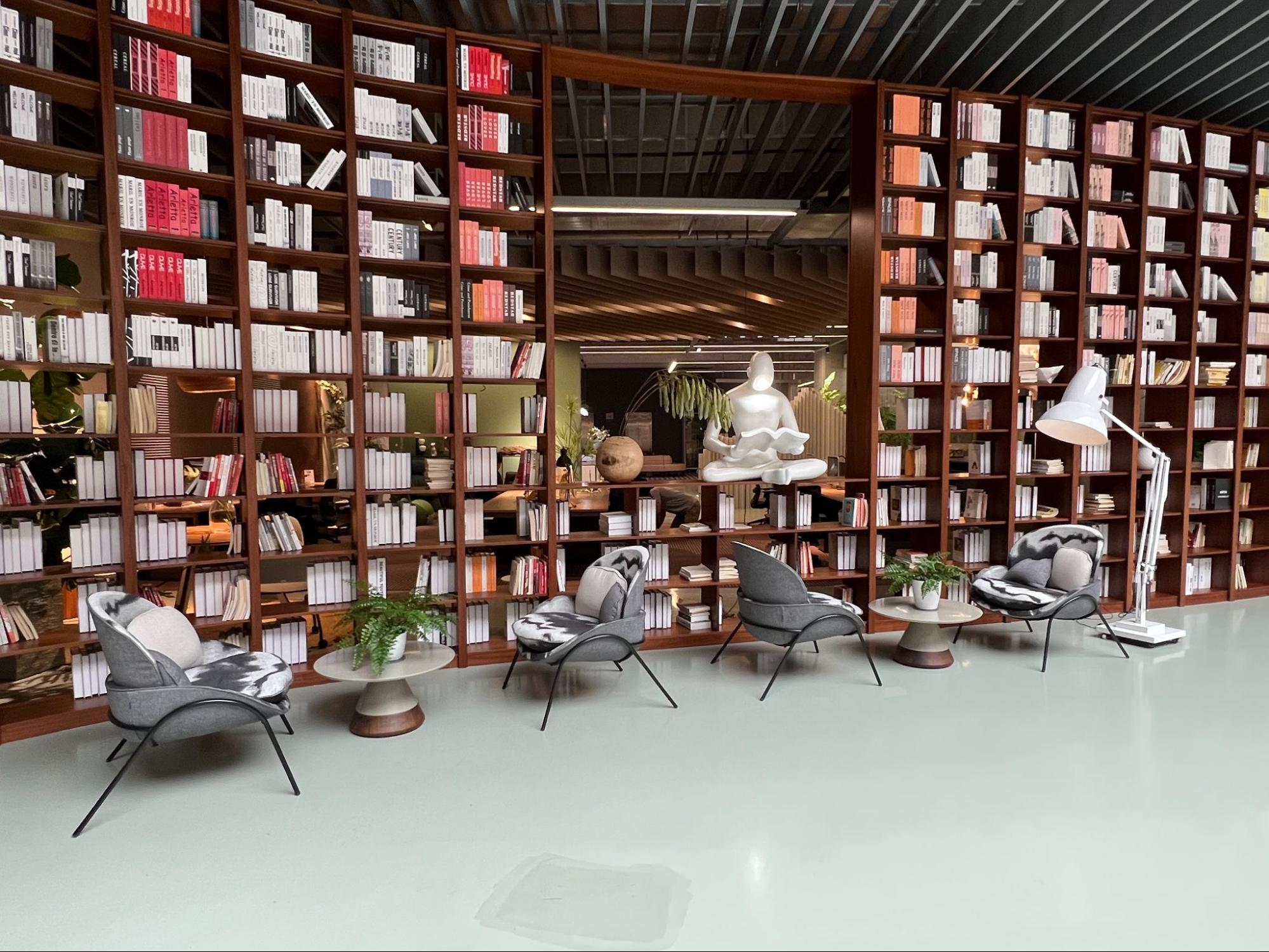
Let’s be honest: your current office layout was probably designed by a series of panic attacks and "temporary" fixes.
First, it was the "we need to fit three more interns in the corner" phase. Then came the "let’s buy whatever desk is available on Prime" era. Now, your workspace looks less like a powerhouse of productivity and more like a game of Tetris played by someone who’s never seen a square.
At Workscape Designs, we’ve seen it all: the graveyard of mismatched swivel chairs, the conference rooms that feel like interrogation chambers, and the breakrooms that are essentially just closets with a sad Keurig.
It’s time for The Great Office Audit. It’s time to stop cramming people into corners and start strategizing. Here is how you reclaim your square footage, your sanity, and your bottom line.
Most leadership teams view office square footage as a container—a static box with a fixed capacity. If there’s a gap, you fill it. But there is a hidden "cramming tax" associated with high-density, low-strategy environments. When employees feel like sardines, they stop acting like innovators. They start acting like… well, sardines.
Cramming leads to:
Before you pick out a single ergonomic chair or a trendy moss wall, you need to conduct a brutal inventory of what is actually happening within your four walls.
Look at your desks. How many are actually occupied between 10 AM and 2 PM? In the age of hybrid work, many companies are paying for "ghost desks"—expensive real estate occupied only by a dusty monitor and a stray stapler. If 30% of your desks are empty on any given Tuesday, why are you still cramming people into the other 70%? Strategy means reallocating that "ghost" space into something functional, like a huddle room.
Do you have a 12-person boardroom that is constantly used by two people for private Zoom calls? That’s not a meeting room; that’s a waste of heating and cooling. Strategy means matching the size of the space to the size of the task.
Watch how people move. Do they have to do a sideways shuffle to get to the printer? Do they avoid the kitchen because the layout creates a bottleneck? If your office has "traffic jams," your strategy is failing.
Strategizing isn't about having less stuff; it’s about having the right stuff in the right places. We like to call this "The Zone Defense." Instead of a sea of identical workstations, a strategic workspace is divided by activity.
This is the sanctuary. High-backed booths, acoustic dampening panels, and zero-distraction layouts. This is where the deep work happens. If you’re still expecting people to write complex code in the middle of a high-traffic corridor, you’re not strategizing; you’re sabotaging.
Innovation rarely happens at a desk. It happens at the coffee machine or the lounge. Strategic design creates "planned collisions"—spaces where people from different departments actually want to hang out. By moving the "social" furniture away from the "focus" furniture, you give people permission to be loud and creative.
The modern office needs to be a transformer. We’re talking about modular components—nesting tables and mobile whiteboards—that can shift from a training room setup to an all-hands meeting space in fifteen minutes. Static furniture is the enemy of growth.
Now we get to the fun part—the part where we make it look like a place humans actually want to be.
Strategizing your aesthetic isn't just about picking "cool" colors. It’s about human psychology. Color theory and lighting aren’t "fluff"; they are precision tools for performance.
Color does more than just dictate a mood; it anchors your identity. While blue hues foster deep focus and warmer tones in lounges encourage relaxation, integrating your brand’s signature palette unifies the team under a shared vision. When employees see their culture reflected in their surroundings, it fosters a sense of belonging and pride.
If your office is currently lit by flickering overhead fluorescents, that’s your first sign that a strategy shift is required. Layered lighting—combining ambient, task, and accent lights—can completely change the "vibe" and highlight architectural branding elements without moving a single wall.
Sound management is both a functional necessity and an aesthetic opportunity. High-performance acoustic baffles and felt wall installations dampen distracting chatter to boost productivity, while their sculptural designs serve as modern art. Balancing "active" sound zones with "quiet" retreats ensures the office remains a place where collaboration and concentration can coexist.
Incorporating natural materials like wood and living plants—known as biophilic design—reduces stress levels and improves air quality. These organic textures soften the industrial edges of a modern workspace, making the office feel less like a "station" and more like a living ecosystem that supports human well-being.
A great office isn't just what you see; it's what you experience. This includes the tech integration that often gets overlooked during a "cramming" phase.
Strategic design ensures that power outlets are exactly where people want to sit, not just where the builder put them thirty years ago. It means hidden cable management so your beautiful new communal table doesn't look like a plate of spaghetti. It means integrated AV for those hybrid meetings so the remote worker doesn't feel like a disembodied voice.
Your office shouldn't be a storage unit for employees. It should be a tool for your business. When you stop cramming, you open up possibilities for culture to actually grow. You can’t build a "vibrant company culture" in a space that feels like a basement or a crowded airport lounge.
Strategizing your environment tells your team: “We value your work enough to give you a place that supports it.”
If your employees are wearing noise-canceling headphones for eight hours a day just to survive, or if you have "temporary" folding tables being used as permanent desks, you are definitely cramming.
Absolutely. In fact, strategy is more important in small spaces. Every square inch has to work twice as hard. Use vertical storage, multi-purpose furniture, and glass partitions to create a sense of scale.
The audit itself is just a shift in mindset and data collection. The cost of not auditing—through lost productivity, high turnover, and inefficient use of rent—is almost always higher than the cost of a redesign.
Every project is unique, but a strategic overhaul can take anywhere from a few weeks for a furniture refresh to a few months for a full-scale environmental transformation.
We don’t just sell chairs and tables. We analyze how your team works, identify the friction points in your current layout, and create environments that solve problems. We turn "space" into "workplace."
The "Great Office Audit" isn't a one-time event; it’s a commitment to your company’s future. The world of work has changed. Your team’s expectations have shifted. If your office is still operating on a 2015 "pack 'em in" strategy, you’re not just outdated—you’re falling behind.
Stop the cramming. Stop the chaos. Let’s sit down, look at your floor plan, and build something that actually works for your business.
Let’s be honest: your current office layout was probably designed by a series of panic attacks and "temporary" fixes.
First, it was the "we need to fit three more interns in the corner" phase. Then came the "let’s buy whatever desk is available on Prime" era. Now, your workspace looks less like a powerhouse of productivity and more like a game of Tetris played by someone who’s never seen a square.
At Workscape Designs, we’ve seen it all: the graveyard of mismatched swivel chairs, the conference rooms that feel like interrogation chambers, and the breakrooms that are essentially just closets with a sad Keurig.
It’s time for The Great Office Audit. It’s time to stop cramming people into corners and start strategizing. Here is how you reclaim your square footage, your sanity, and your bottom line.
Most leadership teams view office square footage as a container—a static box with a fixed capacity. If there’s a gap, you fill it. But there is a hidden "cramming tax" associated with high-density, low-strategy environments. When employees feel like sardines, they stop acting like innovators. They start acting like… well, sardines.
Cramming leads to:
Before you pick out a single ergonomic chair or a trendy moss wall, you need to conduct a brutal inventory of what is actually happening within your four walls.
Look at your desks. How many are actually occupied between 10 AM and 2 PM? In the age of hybrid work, many companies are paying for "ghost desks"—expensive real estate occupied only by a dusty monitor and a stray stapler. If 30% of your desks are empty on any given Tuesday, why are you still cramming people into the other 70%? Strategy means reallocating that "ghost" space into something functional, like a huddle room.
Do you have a 12-person boardroom that is constantly used by two people for private Zoom calls? That’s not a meeting room; that’s a waste of heating and cooling. Strategy means matching the size of the space to the size of the task.
Watch how people move. Do they have to do a sideways shuffle to get to the printer? Do they avoid the kitchen because the layout creates a bottleneck? If your office has "traffic jams," your strategy is failing.
Strategizing isn't about having less stuff; it’s about having the right stuff in the right places. We like to call this "The Zone Defense." Instead of a sea of identical workstations, a strategic workspace is divided by activity.
This is the sanctuary. High-backed booths, acoustic dampening panels, and zero-distraction layouts. This is where the deep work happens. If you’re still expecting people to write complex code in the middle of a high-traffic corridor, you’re not strategizing; you’re sabotaging.
Innovation rarely happens at a desk. It happens at the coffee machine or the lounge. Strategic design creates "planned collisions"—spaces where people from different departments actually want to hang out. By moving the "social" furniture away from the "focus" furniture, you give people permission to be loud and creative.
The modern office needs to be a transformer. We’re talking about modular components—nesting tables and mobile whiteboards—that can shift from a training room setup to an all-hands meeting space in fifteen minutes. Static furniture is the enemy of growth.
Now we get to the fun part—the part where we make it look like a place humans actually want to be.
Strategizing your aesthetic isn't just about picking "cool" colors. It’s about human psychology. Color theory and lighting aren’t "fluff"; they are precision tools for performance.
Color does more than just dictate a mood; it anchors your identity. While blue hues foster deep focus and warmer tones in lounges encourage relaxation, integrating your brand’s signature palette unifies the team under a shared vision. When employees see their culture reflected in their surroundings, it fosters a sense of belonging and pride.
If your office is currently lit by flickering overhead fluorescents, that’s your first sign that a strategy shift is required. Layered lighting—combining ambient, task, and accent lights—can completely change the "vibe" and highlight architectural branding elements without moving a single wall.
Sound management is both a functional necessity and an aesthetic opportunity. High-performance acoustic baffles and felt wall installations dampen distracting chatter to boost productivity, while their sculptural designs serve as modern art. Balancing "active" sound zones with "quiet" retreats ensures the office remains a place where collaboration and concentration can coexist.
Incorporating natural materials like wood and living plants—known as biophilic design—reduces stress levels and improves air quality. These organic textures soften the industrial edges of a modern workspace, making the office feel less like a "station" and more like a living ecosystem that supports human well-being.
A great office isn't just what you see; it's what you experience. This includes the tech integration that often gets overlooked during a "cramming" phase.
Strategic design ensures that power outlets are exactly where people want to sit, not just where the builder put them thirty years ago. It means hidden cable management so your beautiful new communal table doesn't look like a plate of spaghetti. It means integrated AV for those hybrid meetings so the remote worker doesn't feel like a disembodied voice.
Your office shouldn't be a storage unit for employees. It should be a tool for your business. When you stop cramming, you open up possibilities for culture to actually grow. You can’t build a "vibrant company culture" in a space that feels like a basement or a crowded airport lounge.
Strategizing your environment tells your team: “We value your work enough to give you a place that supports it.”
If your employees are wearing noise-canceling headphones for eight hours a day just to survive, or if you have "temporary" folding tables being used as permanent desks, you are definitely cramming.
Absolutely. In fact, strategy is more important in small spaces. Every square inch has to work twice as hard. Use vertical storage, multi-purpose furniture, and glass partitions to create a sense of scale.
The audit itself is just a shift in mindset and data collection. The cost of not auditing—through lost productivity, high turnover, and inefficient use of rent—is almost always higher than the cost of a redesign.
Every project is unique, but a strategic overhaul can take anywhere from a few weeks for a furniture refresh to a few months for a full-scale environmental transformation.
We don’t just sell chairs and tables. We analyze how your team works, identify the friction points in your current layout, and create environments that solve problems. We turn "space" into "workplace."
The "Great Office Audit" isn't a one-time event; it’s a commitment to your company’s future. The world of work has changed. Your team’s expectations have shifted. If your office is still operating on a 2015 "pack 'em in" strategy, you’re not just outdated—you’re falling behind.
Stop the cramming. Stop the chaos. Let’s sit down, look at your floor plan, and build something that actually works for your business.

Want a Thriving Business? The Connection Between Workspace Aesthetics and Client Trust

Double Your Output: How Workspace Lighting Affects Employee Efficiency

